4 Proven Ways to Stop Yard Erosion on Sloped Twin Cities Lots
Land Concepts Inc. • October 28, 2026
Watching your valuable topsoil wash down the street after a heavy rainstorm is a frustrating reality for properties built on steep grades. Runoff ruins foundations, strips away nutrients, and leaves ugly gullies trenched into your yard. The crews at Land Concepts, Inc. deal with washout issues constantly by implementing physical barriers and deep rooting plants. Managing water velocity is the secret to keeping your property intact.
There are reliable ways to stop yard erosion on sloped Twin Cities lots before the damage threatens your home foundation. Standard grass alone rarely has the root depth required to hold a steep hillside together under heavy rain. You need structural landscaping solutions designed specifically for high velocity runoff. We outlined the four most effective techniques our landscape design and installation teams use to anchor sloped yards.
What We Cover:
- Tip 1: Install Deep Rooted Native Plantings
- Tip 2: Construct Terraced Retaining Walls
- Tip 3: Lay Permeable Heavy Hardscaping
- Tip 4: Reroute Water With Dry Creek Beds
- Frequently Asked Questions
Stop Your Soil From Washing Away
Tip 1: Install Deep Rooted Native Plantings
Standard turf grass has shallow root systems that easily tear away when water rushes over the surface. Swapping standard sod for specific native plants anchors the hillside deep below the visible grade. The extensive root networks of native shrubs act like an underground net holding the earth tightly in place.
- Deep Anchors: Prairie dropseed and creeping junipers send roots several feet down into the soil to bind the dirt together.
- Canopy Interception: Dense foliage breaks the physical impact of heavy raindrops before they can dislodge the bare soil below.
- Low Maintenance: Native varieties planted in Clearwater, MN require far less watering and fertilizer once their massive root structures are established.
Tip 2: Construct Terraced Retaining Walls
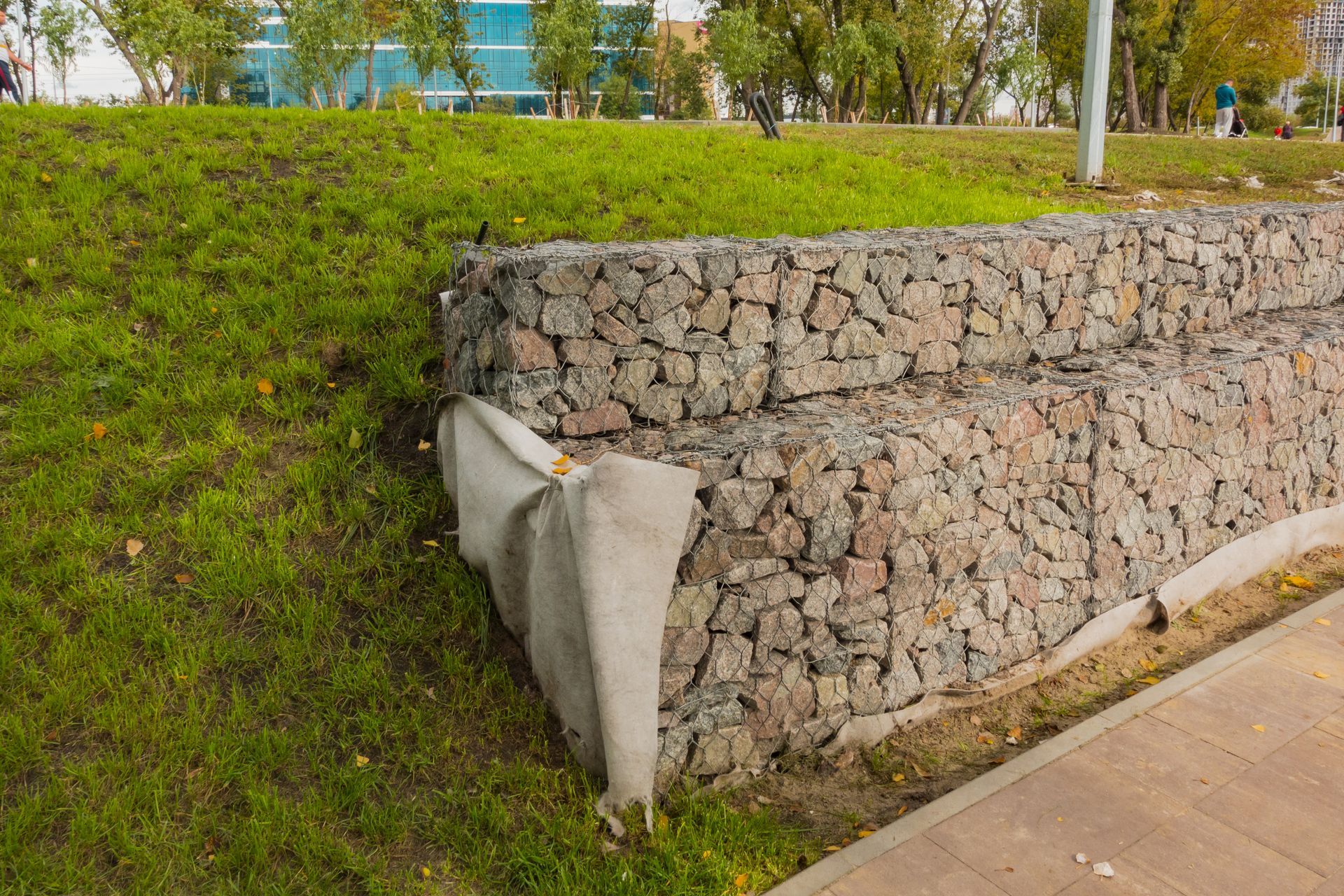
A long, uninterrupted slope allows water to build dangerous speed and destructive force as it travels downward. Breaking the hill into flat, step like sections completely stops the momentum of the runoff. Retaining walls turn a useless steep grade into level planting beds or functional patio space.
- Velocity Reduction: Flat terraces force the water to slow down and soak into the ground rather than rushing over the top.
- Structural Support: Heavy masonry blocks physically hold back the weight of the saturated soil to prevent mudslides.
- Usable Space: Creating level tiers gives you accessible garden beds that are easier to mulch and weed safely.
Tip 3: Lay Permeable Heavy Hardscaping
Traditional concrete paths on a slope act like water slides, accelerating the runoff toward your home foundation. Permeable paving systems solve this by allowing the rainwater to drain directly through the joints into a specialized gravel sub base. This heavy material stays put during storms while quietly managing the water flow.
- Joint Drainage: Specially designed spacer lugs on the pavers create wide joints filled with fine aggregate that filter water downward.
- Base Storage: The deep crushed rock foundation acts as a holding tank, allowing water to slowly percolate into the subsoil.
- Weight Stability: The sheer mass of the concrete pavers ensures the walking surface will not wash away during flash floods.
Tip 4: Reroute Water With Dry Creek Beds
Sometimes you cannot stop the water, so you have to intelligently direct where it goes. Dry creek beds use heavy river rock to line the natural gullies where runoff already wants to travel. This intentional channel guides the water safely away from structures without eroding the surrounding dirt.
- Erosion Armor: Large boulders and heavy river stones line the trench, protecting the bare soil from the scouring force of the water.
- Natural Aesthetics: When not actively flowing with water, the stone feature looks like a deliberate and beautiful landscape design element.
- Strategic Routing: The rock channel catches water from downspouts and safely directs it toward designated drainage swales or street grates.
Frequently Asked Questions
How do you stop soil erosion on a steep hill?
The most effective method is interrupting the speed of the water using physical barriers or deep rooted vegetation. Planting native groundcovers binds the soil together underground, while installing terraced retaining walls physically breaks the slope into flat sections. Combining heavy hardscaping with strategic planting ensures the dirt stays anchored during severe storms.
What plants have the best root systems for erosion control?
Native creeping shrubs and ornamental grasses provide the best structural support for sloped properties. Plants like creeping juniper, sumac, and switchgrass develop massive, tangled root networks that reach deep into the subsoil. These native varieties evolved to survive harsh conditions and hold their ground against extreme weather.
Do retaining walls help with yard drainage?
Yes, when engineered correctly, retaining walls are highly effective drainage tools. A proper installation includes a perforated drain pipe buried in clean crushed stone directly behind the bottom course of blocks. This system catches the water sinking into the terrace and pipes it safely away before hydrostatic pressure can build up and blow out the wall.
Stop Your Soil From Washing Away
Letting runoff chew away at your hillside destroys your property value and threatens your structural foundations. Implementing professional grading and hardscaping solutions locks your dirt in place permanently. Reach out to our design experts to assess your sloped yard and build a resilient defense against heavy rain.
Share This Blog